Remy Stroomer
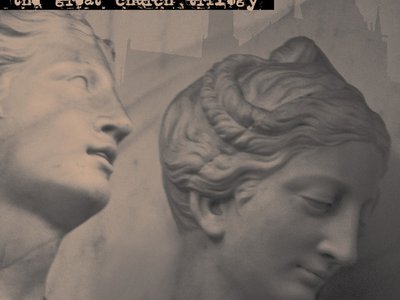
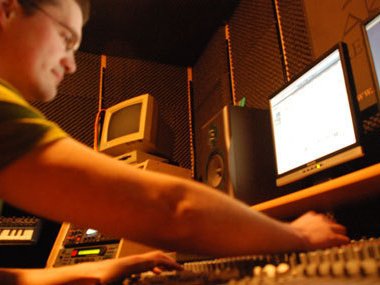
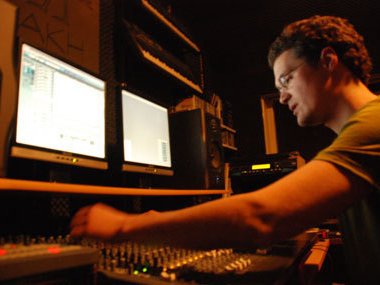
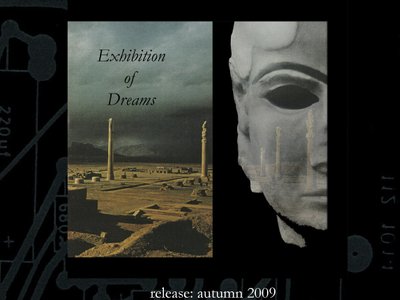
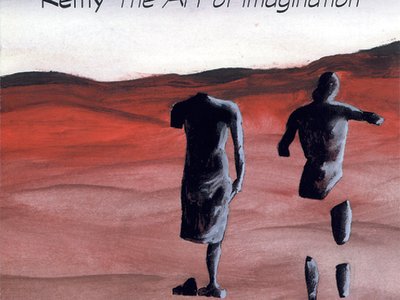
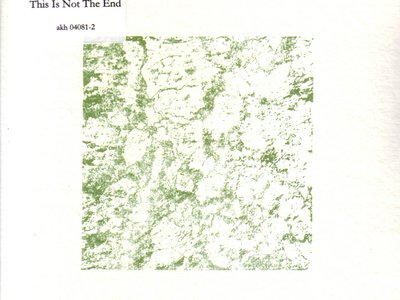
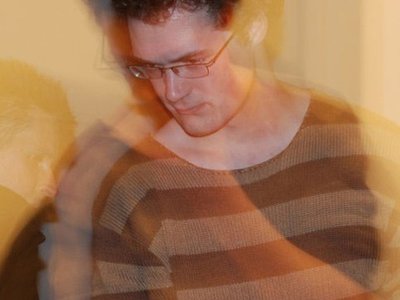
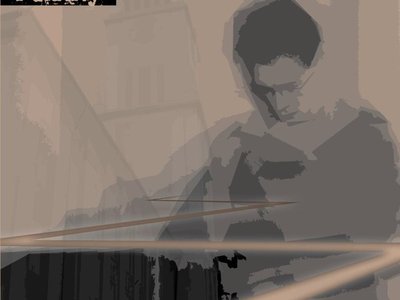
Remy Stroomer is born on October 9th, 1979 in Haarlem (The Netherlands). At the age of nine, he starts to take keyboard-lessons and around the same time, he creates his first compositions. With expanding his skills on keyboards, he attempts on performing on stage for the first time in 1994. First as a solo-performer, but from halfway the nineties also with other bands and musicians and playing music in many different areas, such as electronics, jazz, rock and symphonic/progressive rock. Although Remy tries to let hear his own things and following his own intuition into his own musical journey, Klaus Schulze is mostly mentioned in reviews of Remy’s work as a comparison. But, surprisingly, Remy already started to make Schulze-like tracks before he has ever took notice of this musical style. At the end of 1999, Remy’s first album “Exhibition of Dreams” is released as a double-cdr on AKH Records. On September 10th, 2000, his first official cd “The Art of Imagination” sees the light of day and is more successful than expected. With this album, Remy wins the third price in the category ‘Best Newcomer Electronic Music’ at the 2001-edition of the well-acclaimed German Schwingungen-Festival (hosted by Winfred Trenkler). Exploring his musical capabilities even further, Remy releases two separate albums in 2001: “DisConnected” and “Connected”. Both albums gain a lot of attention from both listeners as critics. The follow-up, “Different Shades of Dust” gets its release on October 9th, 2004 and coincides with three performances at the annual E-live Festival in Eindhoven (The Netherlands). The musical style on “Sense” (2006) is much more introspective and experimental, while Remy gives his first performance at the Grote Kerk in Haarlem in November 2007; the first of four of which recordings will be compiled in 2011 on “The Great Church Trilogy”. The next studio-album, “This Is Not The End”, again on AKH Records, is being released on April 13th 2008, and this same day Remy performs at the E-Day Festival in Eindhoven, as support act of Tangerine Dream’s Edgar Froese. On January 1st 2009, Remy starts recording the tenth anniversary release of his debut album. The cd “EoD” contains new recordings of tracks from the original double-cd. The original album is released in early 2010 in a remastered version. For his next album, Remy works about a year in his studio on new material and uses recordings from his appearance at the October 2010 Ricochet Gathering in Berlin. “i-Dentity” is released in April 2011 that coincides with a concert at the main stage during the E-Day festival and is the first release on his new label Deserted Island Music. During the first part of 2012 Remy is busy making preparations for a concert on May 19th at the Grote of St. Bavokerk in Haarlem, featuring Ron Boots, Eric and Harold van der Heijden, plus two violists, a celloplayer and a choir. Together with Eric van der Heijden he plays the monumental C. Müller church organ. In 2012, Remy is nominated twice during the Schallwelle Preisverleihung: “Best Act international 2012” and “Best Album International 2012”, with a top 10-mark for “i-Dentity” and a top 3-mark for “The Great Church Trilogy”. In between the activities in recent years Remy has worked off and on with colleague Michel van Osenbruggen (Synth.nl) on a duo project. This collaboration finally brings “PrimiTiveS” in April 2013, to much critical acclaim. In August 2012, Remy performs a session with physical disabled members of the My Breath My Music foundation. Recordings are released in June 2013 as “Sessions 2012”. The appearance at the 2013 E-live festival not only brings Remy to the stage of the upper room of Theater De Enck in Oirschot with his collaborators from “My Breath My Music”, but also will see a guest appearance from guest EM-artist Gert Emmens. The purpose of “My Breath My Music” is to offer people with severe physical disabilities, an opportunity to make music especially with instruments developed for their needs. The Magic Flute is an electronic wind instrument. It is unique because it can be played without hands. The wind instrument can also be connected to other electric sound sources like synthesizers or MIDI computers enabling the user to generate a broad variety of different sounds. The Magic Flute was originally designed as an adaptive musical instrument for people with little or no arm movement. -Biography by Wouter Bessels-
Haarlem, NL
Music
- 0:00 / 2:47
- 0:00 / 1:35
- 0:00 / 1:51
- 0:00 / 1:47